

A Used Ford vs Chevrolet Truck Towing Playbook for Projects around Fayetteville, NC
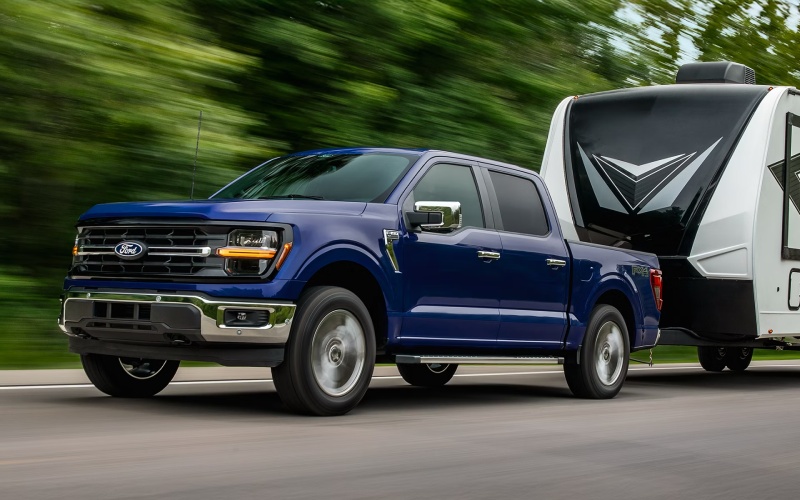
Impex Auto Sales – A Used Ford vs Chevrolet Truck Towing Playbook for Projects around Fayetteville, NC
Comparing used Ford and Chevrolet trucks for towing starts with a clear plan. The best match for a landscaping trailer, a compact skid-steer, or a pair of four-wheelers is not simply the bigger number on a brochure. It is the configuration that delivers repeatable performance with margin for hills, heat, and headwinds. Engine torque curves, axle ratios, cooling, and wheelbase all shape how steady a truck feels when merging onto I-95 or easing into a tight driveway on the edge of the Sandhills. This towing playbook walks through the essentials so project days run on time, even when the schedule gets tight.
Step one is payload math. Payload covers tongue weight, passengers, fuel, and gear. Weigh a loaded trailer’s tongue or estimate 10 to 15 percent of total trailer weight for conventional towing. Subtract that number from the payload sticker on the truck’s door jamb, then leave breathing room for coolers, tools, and a helper riding along. Step two is engine behavior under load. Ford EcoBoost engines offer robust low-rpm torque that helps with stop-and-go launches, while Chevrolet small-block V8s serve up smooth, predictable thrust at highway speed. For frequent heavy hauls, diesel power in either brand adds long-legged efficiency and engine braking on descents.
- Axle Ratio: Higher numbers aid launch and grade climbing but can reduce empty-highway mpg.
- Wheelbase: Longer wheelbases add trailer stability and confidence in crosswinds.
- Tow Package: Factory cooling, hitch hardware, and integrated brake controllers protect driveline health.
- Transmission: Modern 8- to 10-speed units keep the engine in its torque band and reduce heat.
- Brake Setup: Pair a healthy truck brake system with properly adjusted trailer brakes.
- Tires: Load-rated tires and correct pressures transform stability and stopping distances.
- Cameras: Multi-angle and hitch-view cameras simplify solo hookup and tight reversing.
Real-world testing completes the picture. Bring the actual trailer, verify lighting and brake function, and drive a route that includes a steady-grade climb, a rough surface, and a short highway stint. Evaluate temperature stability, downshift logic, steering feel, and how the truck handles mid-corner bumps with the trailer in tow. If the setup feels busy, consider a different axle ratio, suspension tune, or a longer wheelbase—small spec changes can yield a calmer, safer rig. A short-list drive between two similarly equipped trucks—a Ford with an EcoBoost and a Chevrolet with a small-block V8, for example—makes strengths easy to feel in minutes.
Our team supports this process with transparent specs, door-jamb sticker checks, and side-by-side comparisons. From hitch hardware and brake controllers to trailering app demos, the goal is to match the truck to the job, not the other way around. Impex Auto Sales is committed to practical guidance at every step, serving Winston-Salem, Charlotte, and Fayetteville with tools that help buyers choose with confidence. When payload math, gearing, and cooling all point in the same direction, the truck that tows better is the truck that feels easier on a long day—no drama, no guesswork, just steady progress from first light to wrap-up.
0 comment(s) so far on A Used Ford vs Chevrolet Truck Towing Playbook for Projects around Fayetteville, NC